Doctors Without Borders is a humanitarian organization providing life-saving medical aid to people in crises, conflicts, and disasters around the world. They needed a design system that enables staff and partners to create consistent and recognizable communication across both digital and print platforms.


Innsight Phase
Before the design phase, we conducted a brand audit of Doctors Without Borders’ website. We identified strengths such as clear use of imagery, ample spacing between elements, and generally solid content, but the analysis also revealed areas for improvement.
Colors were used inconsistently, bold colors competed for attention, and there was a lack of clear call-to-action and typographic hierarchy. These insights laid the foundation for further design work and prioritized measures that enhanced both the user experience and the brand.
Testimonies: We Speak Out
For many, Doctors Without Borders is primarily known for providing medical emergency aid in crises and disasters, including wars and epidemics. But the organization also has a clear mandate to raise awareness of humanitarian crises and spark debate – because fewer people die when more people are informed. Founded in France in 1971 by doctors and journalists, this combination laid the foundation for Doctors Without Borders to not only deliver life-saving aid, but also engage in témoignage – bearing witness to and reporting on what they see in the field.
Design Phase
The design system we deliver is intended to be easy to use, quick to implement, and robust enough to function even without strong imagery. All elements are designed to work together to maximize the impact of their communication.
The visual concept reflects Doctors Without Borders unique combination of medical expertise and journalistic storytelling. Usage of black-and-white typography and grid represent the journalistic side, while red symbolizes action and urgency. An animated red dot ties the elements together, highlights key points, and guides attention in the same way that news is prioritized in an editorial setting.
Overlooked Crises
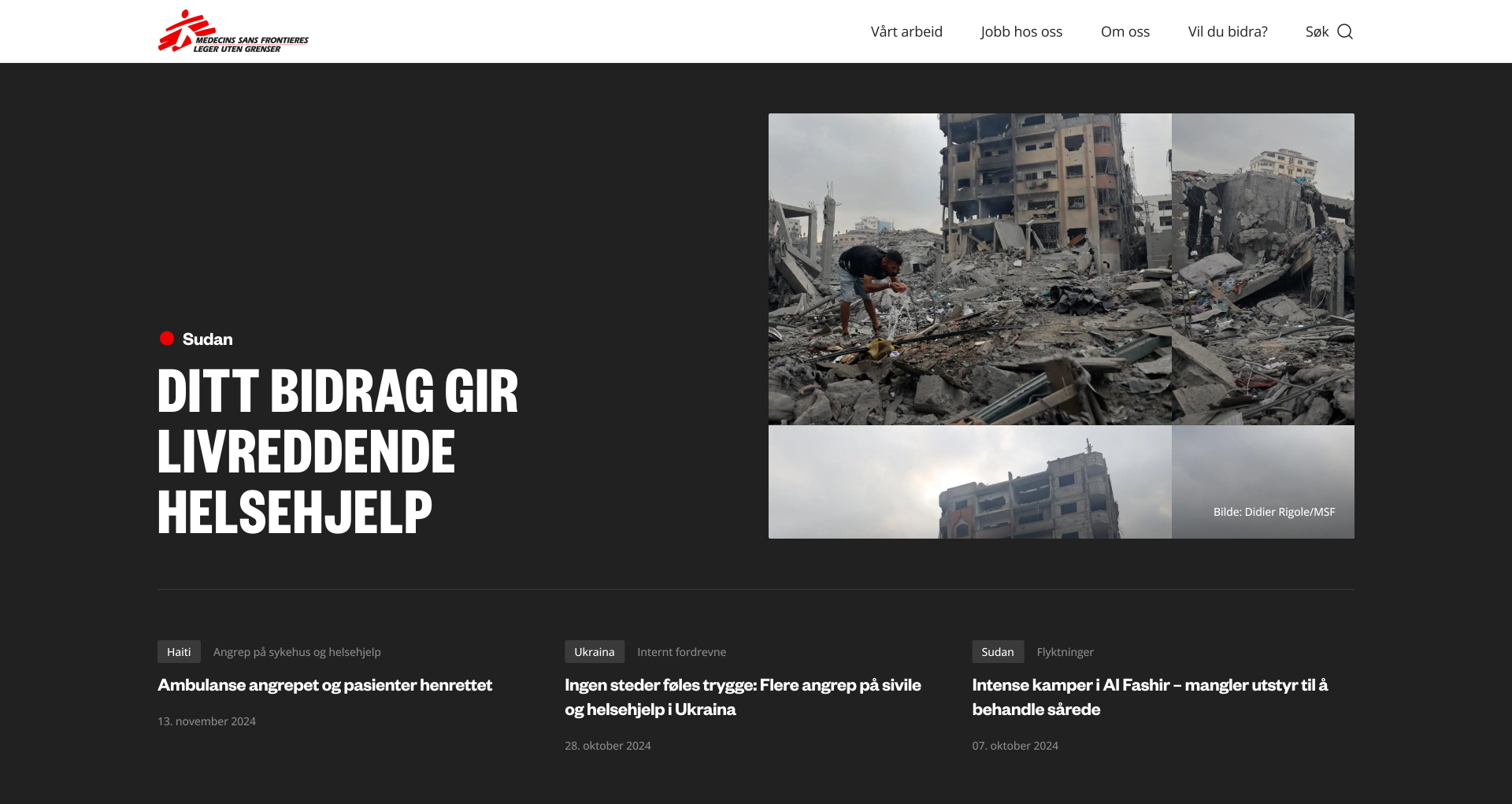
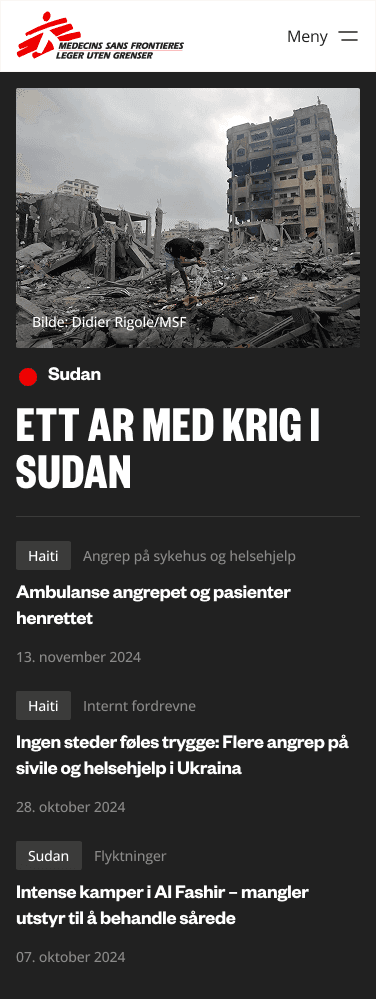
Many wars, conflicts, and humanitarian crises receive little attention in Norwegian media, even though the consequences are significant. In this project, we designed a "news desk" that helps the organization prioritize and highlight all stories, ensuring that important narratives are not lost.
A Donation Form That Conveys the Gravity
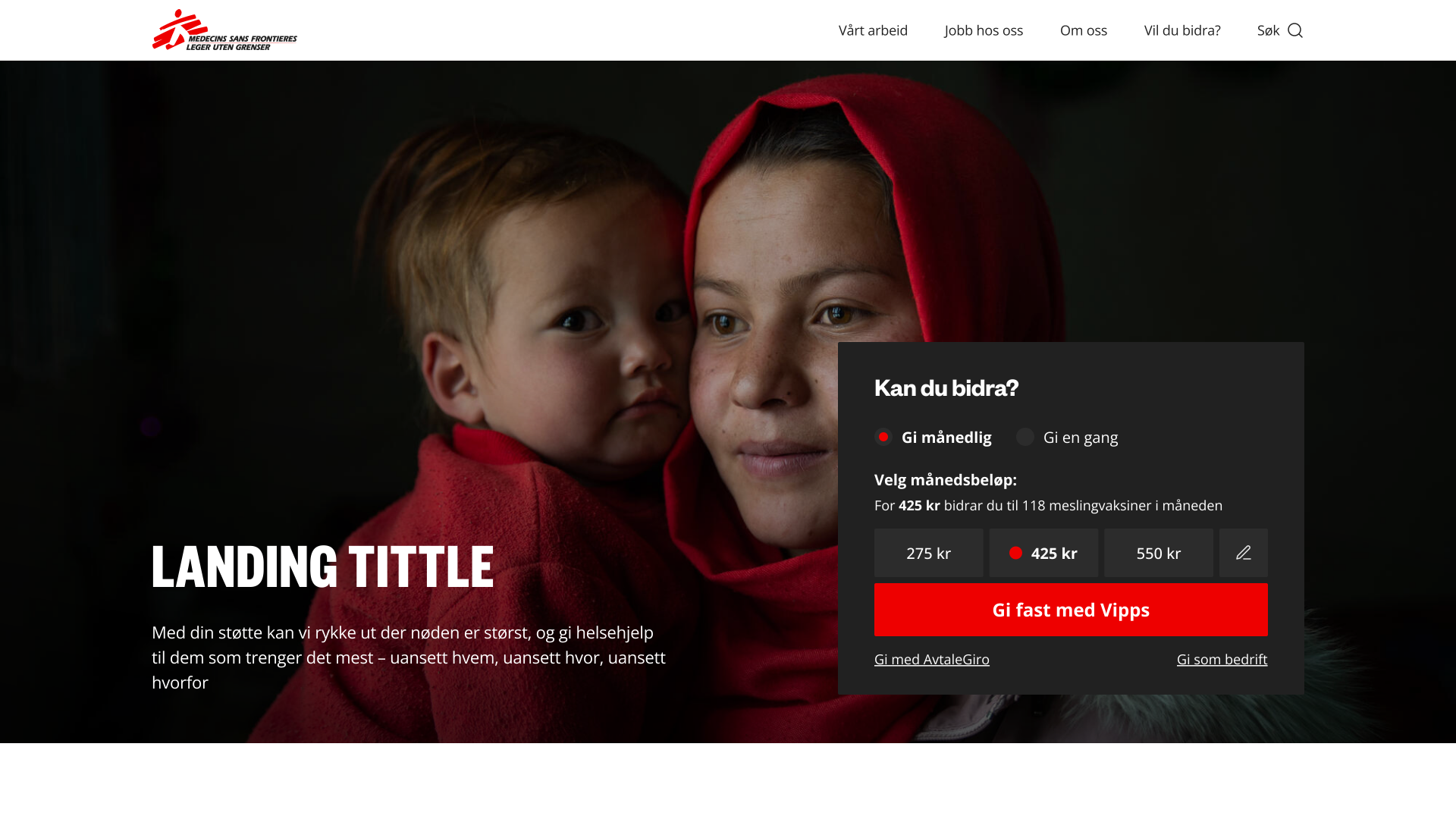
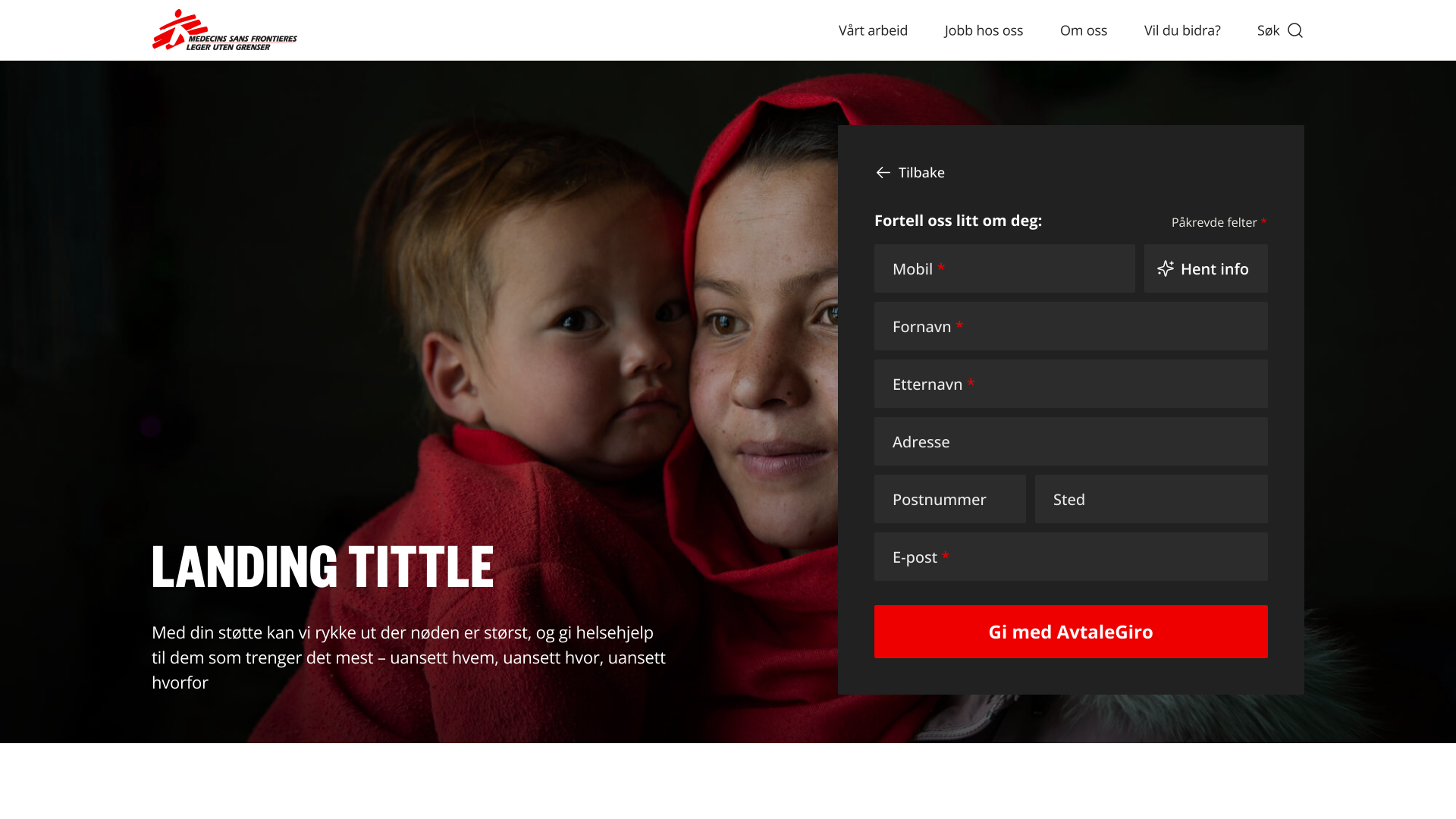
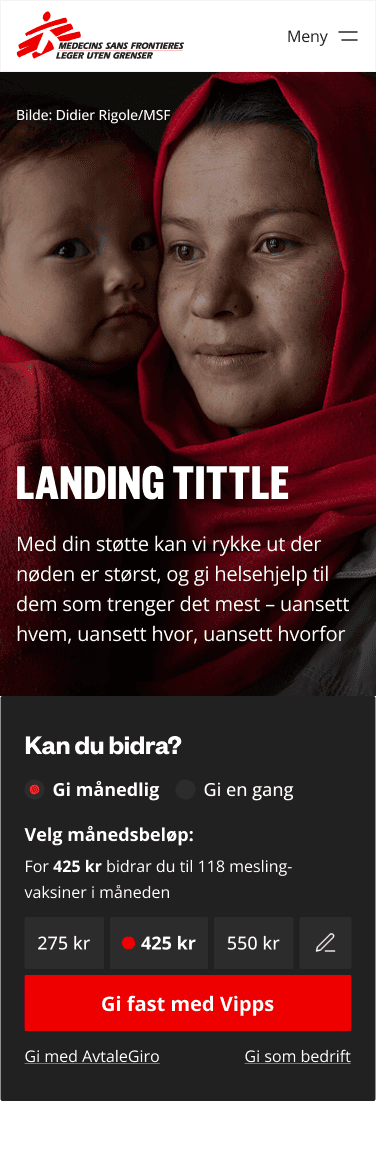
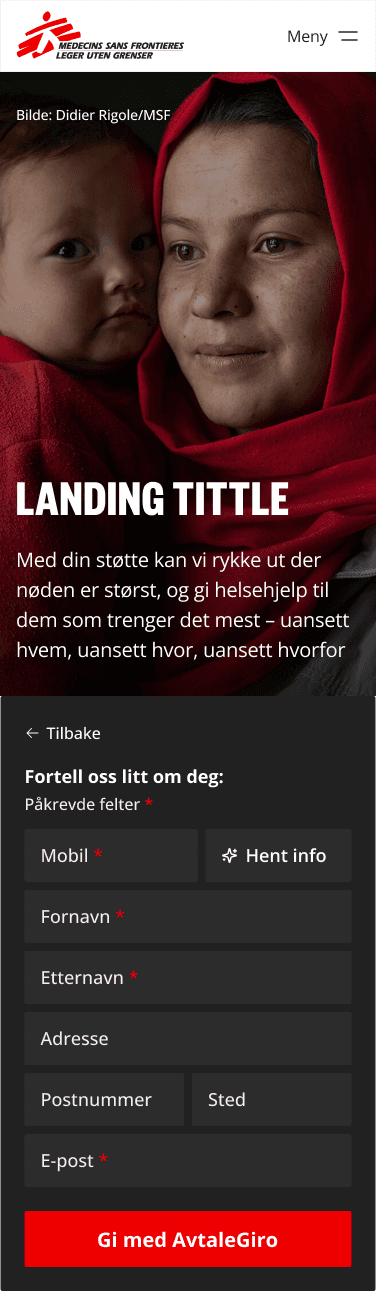
We donate to an organization that actively steps in during wars and conflicts – risking their lives to provide life-saving medical care to those who need it the most. Their donation form should reflect the seriousness of the situation, while also creating a visual distinction from other humanitarian organizations such as the Red Cross and Save the Children.
We therefore introduced a donation form with a dark background, where red is used deliberately for the action button and key figures. The dark background signals crisis and gravity, creating a completely different mood compared to the light and warm forms often associated with charitable organizations.
Grid System
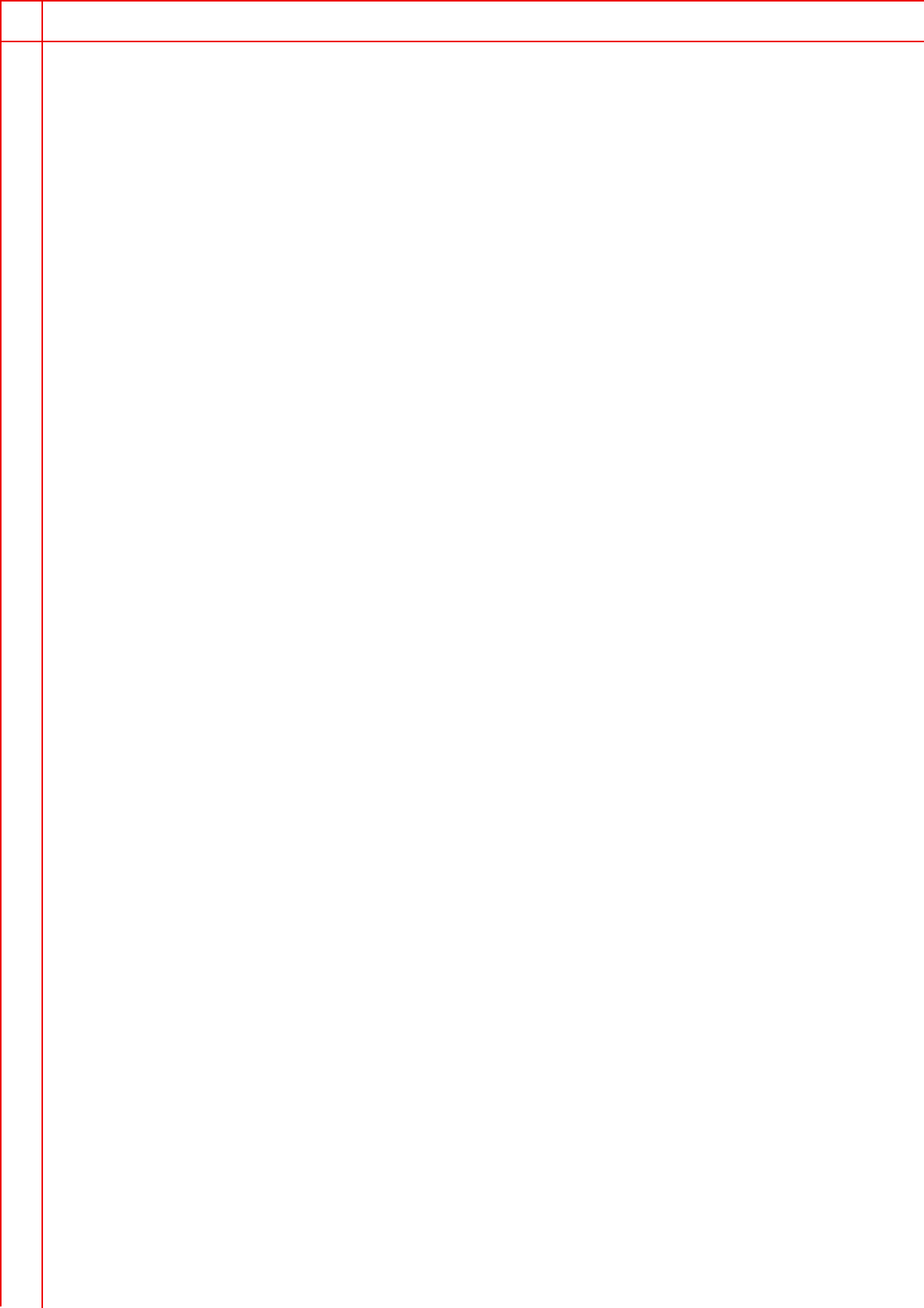
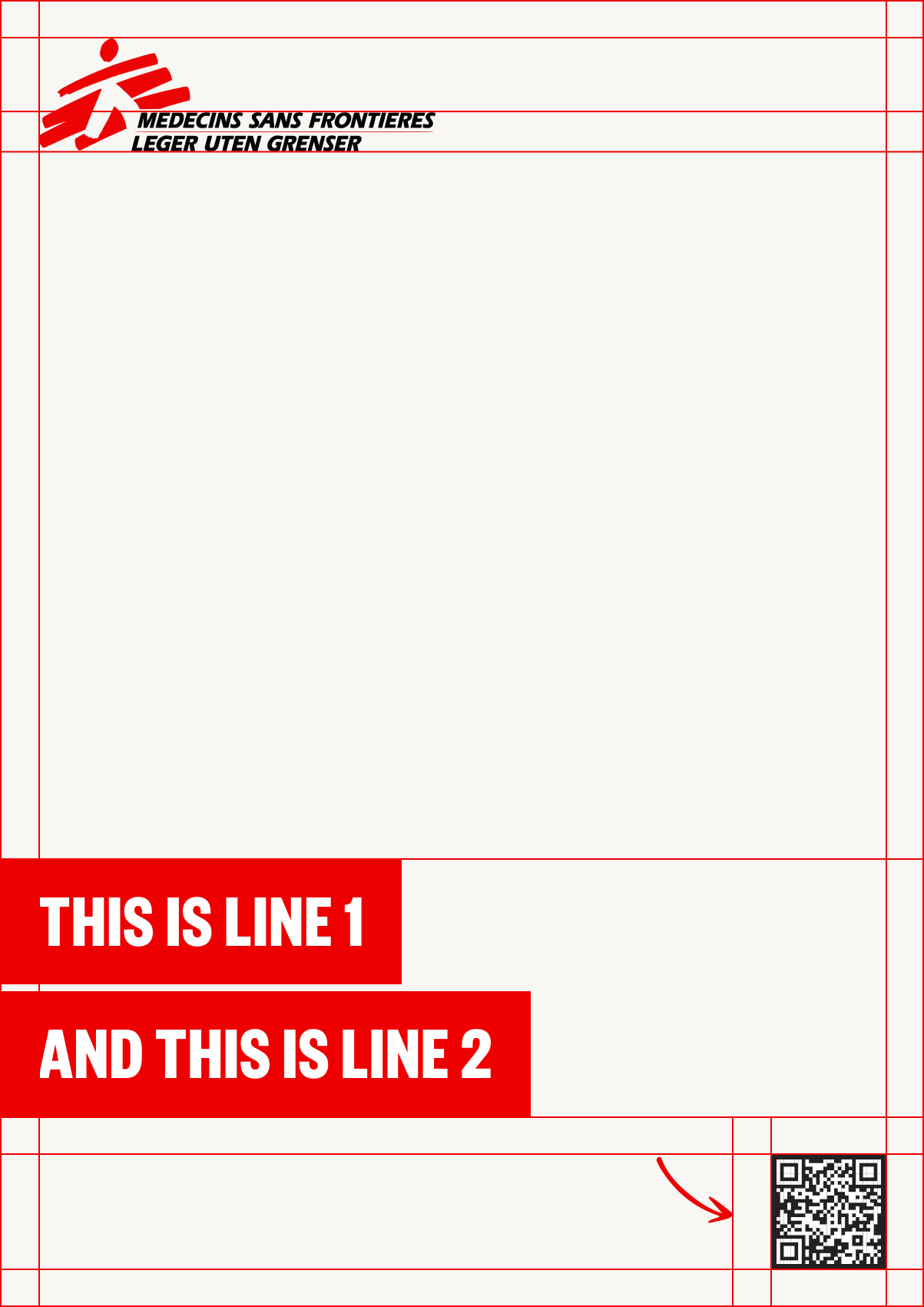
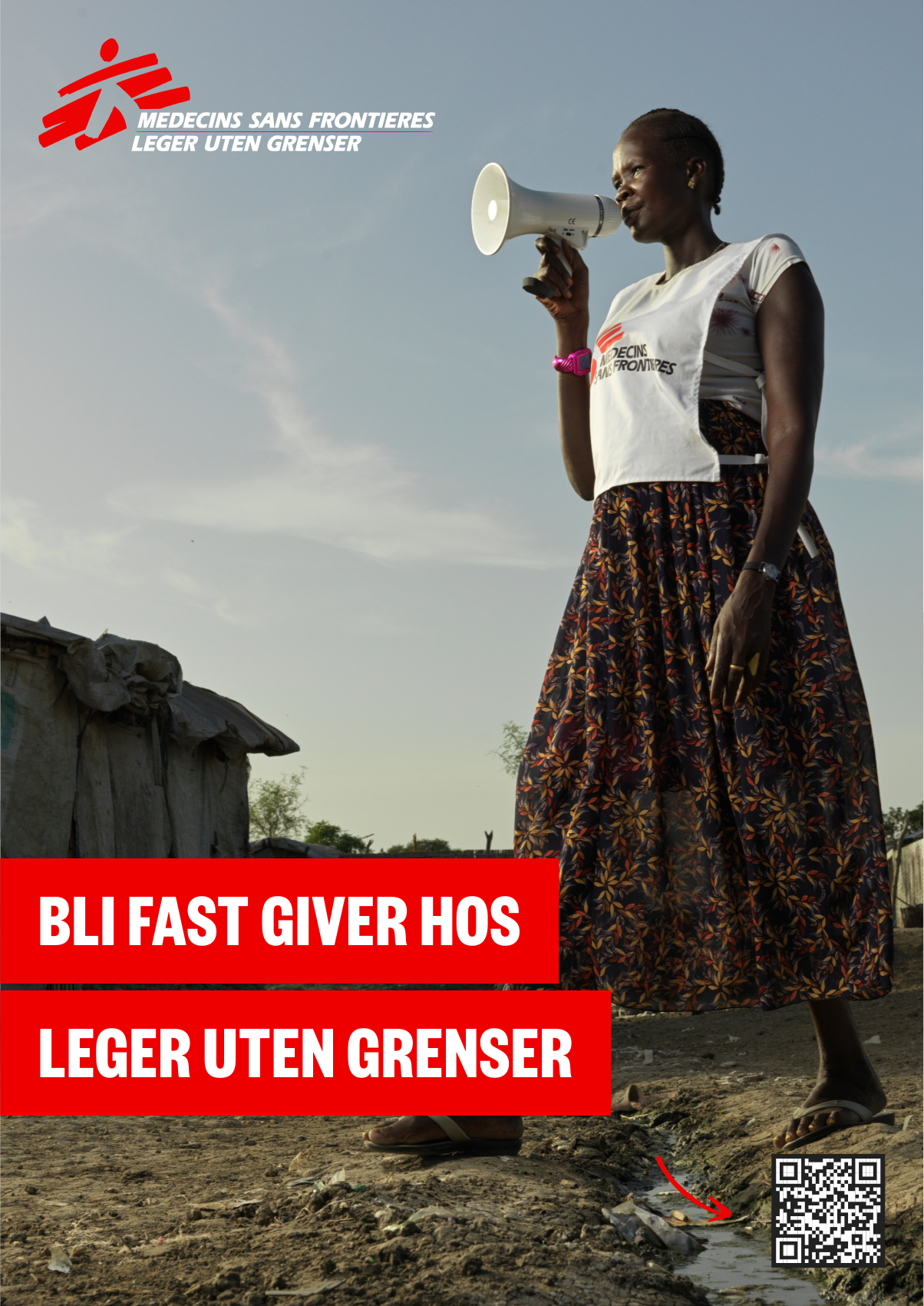
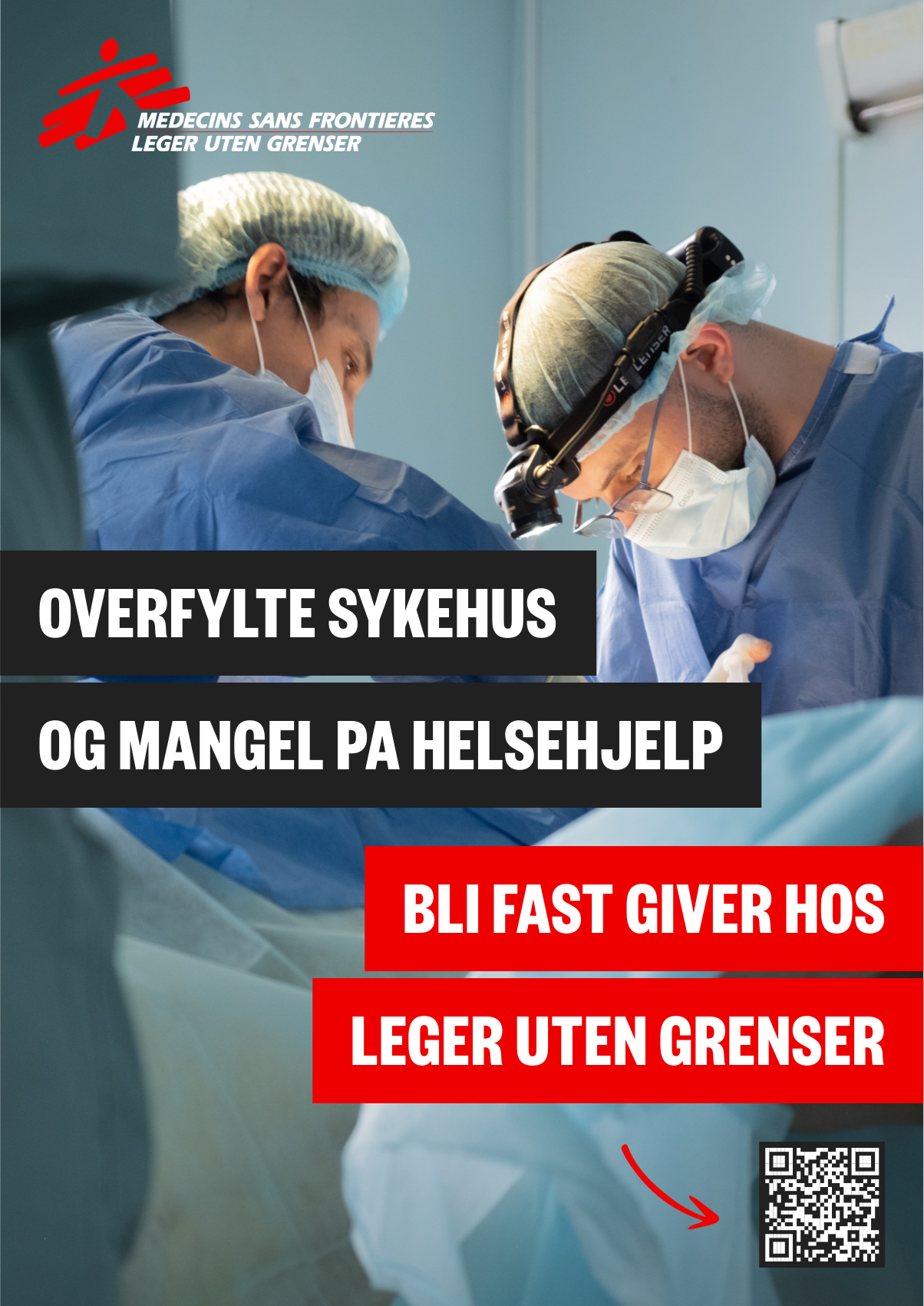
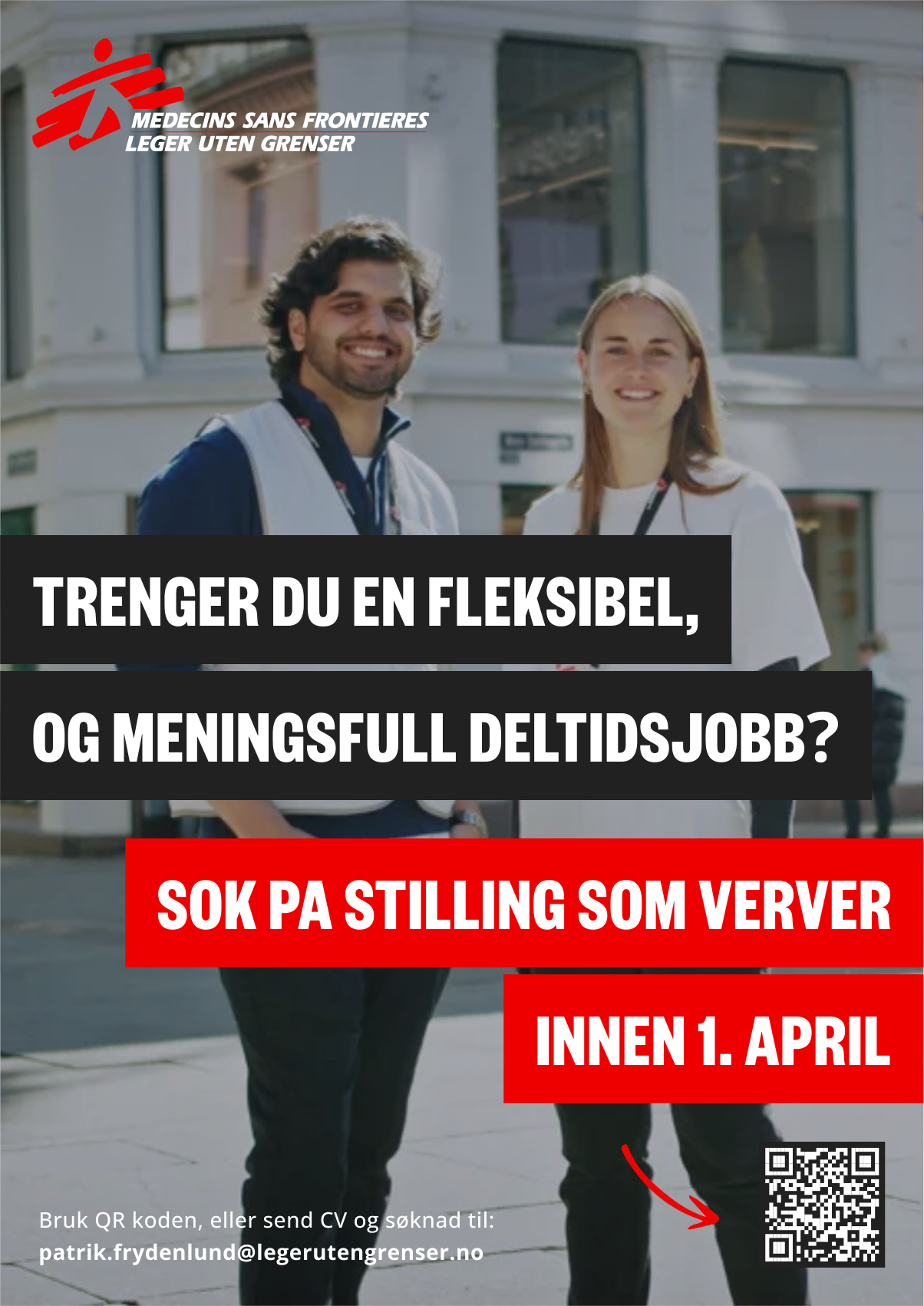
We developed a modular grid system for print materials such as posters, roll-ups, and other formats. The goal is to make it quick and easy for the team to produce materials with a consistent visual structure. The grid is based on the height of the logo text, ensuring that all elements maintain the same proportions and create a harmonious overall impression.
Consultant at Doctors Without Borders
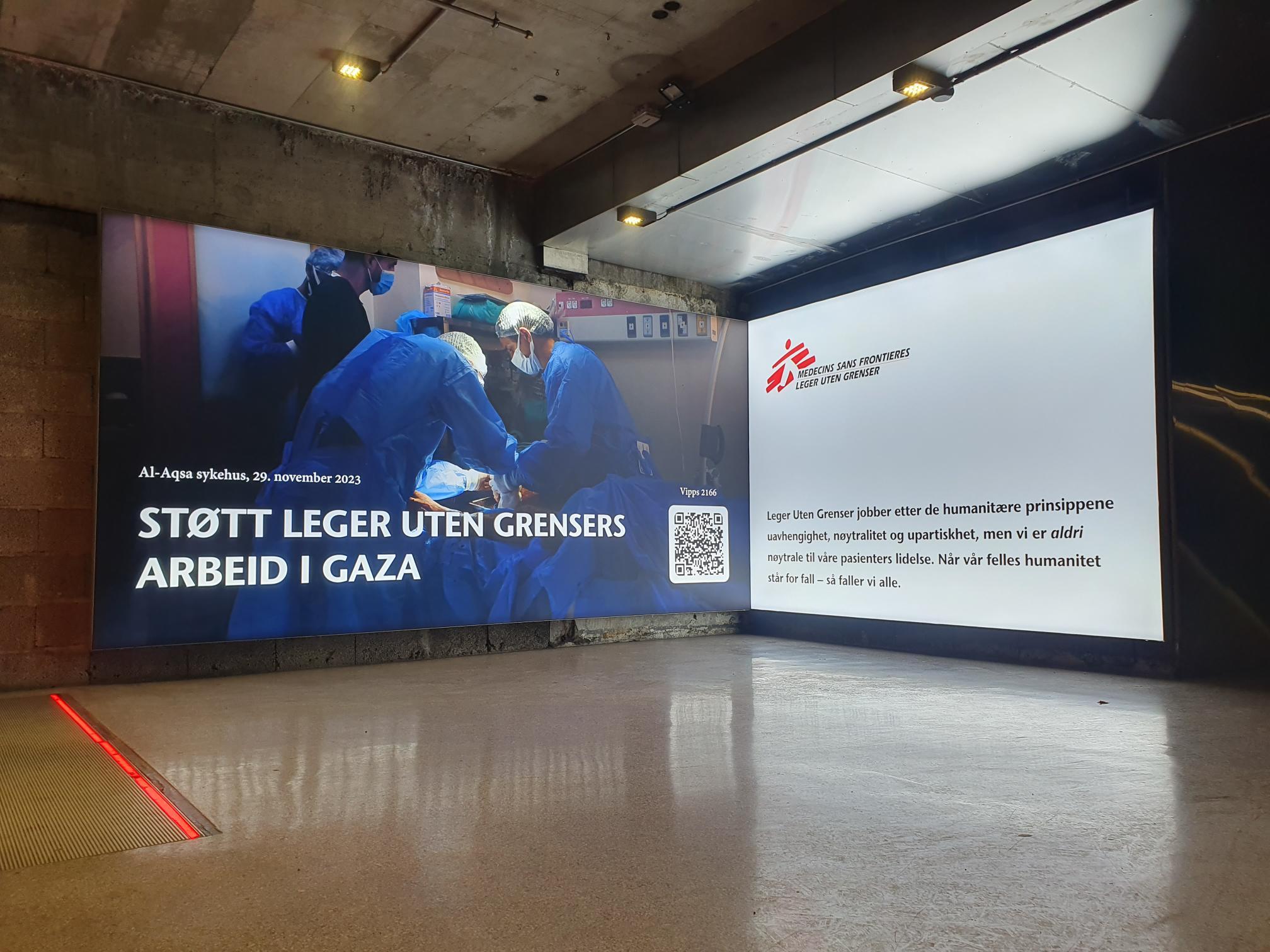
During my first six months as a consultant for Doctors Without Borders, I was asked on short notice to create an outdoor banner at the National Theatre train station. The banner highlighted the organization’s work in Gaza and encouraged donations in the wake of escalating conflict. The project required quick decision-making and a clear visual language that could capture attention in a very short time.